Environment play a very important role in the nourishment of our mind, body and soul. In past few years, lots of emphasis have been made to highlight the effects of environment changes and global warming on human body and our ecosystem. It is very important that we together join hands and control these harmful changes, so as to make our planet safe for our living. Through this thorough article, I would share some changes that we should amend in order to ameliorate the effect of environmental changes on our fertility potential.
Say NO to Plastic
Since 1950s, plastic manufacturing and consumption has increased at an exponential rate. Plastic take hundreds of years to degrade, by breaking down into microplastics (MPs) of <5mm and enter into soil and water bodies and thus into our food chain. We also contact MP through cosmetics, toothpaste and detergents.
Inhalation through air, consumption through food like sea food, and water, microplastics can cause mechanical damage to intestine, cause testicular damage, reduce fertility by causing disorganised spermatogenesis, disruption of blood-testis barrier, inflammation in testis, etc.
Exposure to prenatal nanoplastics lead to vas deferens damage, decrease sperm viability, decrease in testosterone concentration, decrease sperm concentration, increased sperm malformation, spermatogenic cell apoptosis.
It has been found that exposure of 0.016 mg/kg/day of microplastics into human body through air, food or water, can lead to abnormal male semen quality.
Bisphenol A and Phthalates are plasticizer that are used in the synthesis of resin, polyacrylates, polyesters, epoxy resins, and polycarbonate plastics. Bisphenol A and Phthalates act as endocrine disrupting chemicals (EDCs) and hampers male and female fertility.
Bisphenol A : Obesity, Poor oocyte quality
Phthalates : abortions, preterm deliveries, abnormal semen parameters, early puberty in girls, endometriosis, shorter anogenital distance in boys.
It is high time that we completely ban the use of plastic in every industry and replace it with natural and organic items.

Go green
Trees improve air quality by following means:
(1) Reduce air temperature thus, altering pollution concentrations,
(2) Reduce energy consumption in buildings, which consequently reduces air pollutant emissions from the power sources,
(3) Directly remove pollutants from the air.
Urban forests can remove multiple tons of ozone, harmful gases, and particulate matter each year by direct uptake of gasses or temporarily trapping airborne particles.
Tiny pores on tree leaf surfaces called stomata take in air that contain toxic pollutants. Inside the leaf, the gases diffuse into intercellular spaces and react with inner-leaf surfaces. Pollutants like SO2, NO2, CO, and ozone are permanently converted inside the leaf and released as oxygen into the atmosphere. Trees can remove particulate matter by “catching” them temporarily.
It has been found that plantation of trees at road side with medium tree spacing (approximately equal to tree crown diameter) is a cost-effective mean to alleviate air pollution, henceforth, reduce public exposure risk in urban commuting environment.
However, it is very important to consider what type of trees would grow well and work efficiently in a particular city area.
The extent to which the tree species performs filtration process depends on canopy size, leaf size and leaf structure.
- Canopy is the outer most layer of the leaves that the tree forms. It restricts sunlight and rains from getting into the layers which are below the canopy. Bigger canopies can trap more particulate matter, and larger leaves can trap more pollutants.
- Leaves that are rough, rugged and have hairy surfaces act as the “best filters” for PM.

Following trees are found to work efficiently in alleviating air pollution:
- Silver birch, yew and elder trees were the most effective at capturing particles, and their leaves can reduce air pollution by 70-80%.
- London plane, silver maple and honey locust rank above average.
- Nettles found in Himalayan region, Assam, Kerala, and Darjeeling can capture upto 32%.
- Evergreen trees like conifers (pines and cypresses), are also good natural purifiers.
- Trees like walnut, silver oak, holly oak, red cedar, and fig make great choices for reducing air pollution in countries like India, Pakistan, Afganistan, Nepal, etc.
However, before choose a particular tree species for plantation, one should consider certain facts about the surrounding area, tree characteristics, sensitivity of the tree, etc.
- Many species of confers can be very sensitive to salt levels in soils, which tend to be high in areas where salt is used to de-ice roads.
- There are certain trees like Poplars or black gum trees that can emit high levels of VOCs which when exposed to sunlight can increase the air quality index.
- Many herbs and shrubs are rich in pollens that can be a problematic for allergic and asthmatic people.
- Yew hedges that look good as roadside additions for air pollution, have poisonous leaves and berries which means they are not suitable near schools or densely populated areas.
Avoid cosmetics, use natural products
Certain home supplies found in our homes are highly scented or have added artificial colours— like cleaning supplies, detergents, dryer sheets, soaps, deodorants, face and body creams, or car deodorizers. These products have phthalates, phenols, parabens, etc. in them.
Parabens are preservatives that prevent the growth of bacteria and mould in personal care products and cosmetics. Paraben is linked to breast cancer, irritations, allergic reactions, etc.
Phthalates are used to enhance the formulas of cosmetics and personal care products, like shampoo, hair spray, and nail polish. They are used as solvents and perfume fixatives. They are also used to help prevent stiffness in hair spray and reduce cracking in nail polish. Phthalates increase the risk of abortions, preterm deliveries, abnormal semen parameters, early puberty in girls, endometriosis, and shorter anogenital distance in boys.
Heavy metals such as lead, mercury, cadmium, arsenic and nickel, aluminium, are also detected in various types of cosmetics (colour cosmetics, face and body care products, hair cosmetics, herbal cosmetics, etc.).
It’s high time ladies…!!!!!
- Instead of wearing cologne seven days a week, use it five days a week, or three and apply it to your clothing not skin.
- Replace products with scent or colour for products that are more environmentally friendly, more plant-based, and free of chemicals of concern.
- Buy non-PVC items and products labeled “fragrance free” or “phthalate-free”.

Build eco-friendly homes and offices
Globally, air pollutants can be two to five times higher indoors than outdoors. An Eco-house (or Eco-home) is an environmentally low-impact home designed and built using materials and technology that reduces its carbon footprint and lowers its energy needs.
An Eco-house include some or all of the following:
- Wall with thermal insulation: draft exclusion, glazing, wall, roof insulation, and other nontoxic materials. Insulation helps in reducing heat loss, thus decrease the requirement of wood or other heating devices.
- Air-tight room to conserve the heat
- Good daylight
- Passive solar orientation — house glazing oriented south for light and heat
- Solar heat conversion and storage
- Minimum north-facing glazing — to reduce heat loss
- Mechanical ventilation with heat recovery (MVHR) system
- Heating from renewable resources (such as solar, heat pump or biomass)
- Photovoltaic panels, or small wind turbine or electricity from a ‘green’ supplier
- Natural materials that can substitute PVCu and other plastics pipes like bamboo, coconut, cow dung, glass, etc
- Rainwater harvesting
- Grey-water collection that filters the water using a highly effective multi-stage filtration system to remove lint, hair and impurities.
- Composting toilet
- Glass that has two or three layers with a vacuum in between to prevent heat loss (double or triple-glazed windows)
- Solar panels or wind turbines
- Geothermal heating and growing plants on the roof to regulate temperature, quiet the house, and produce oxygen
- A vegetable patch outside the house for some organic vegetable and or fruits
Lime building material can be used as one alternative to cement. Lime has been used as a building material for thousands of years and although energy and CO2 are used in its production, it gently returns to limestone in time, taking in CO2 in the process
Low-pile and natural-fiber floor carpeting traps fewer allergens. Installing carpet with tacks instead of glue also reduces indoor air concentrations of VOCs.
Low and Zero VOC paints should be used to decrease the indoor accumulation of volatile organic chemicals (VOCs).
Rain-water recycling can be done by collecting it from the roof in barrels or cisterns can be used for irrigation and other non-drinking uses.

Eat Organic and Use safe utensils
Nutrition is another important aspect to look upon.
If you can afford to buy organic foods some or all of the time, you can reduce your exposure to harmful pesticides. Try to build your own kitchen garden.
Eat more fresh fruits and vegetables, less processed foods, less meat, more plant-based proteins.
Try to reduce the amount of takeout food or prepared foods in paper, plastic, or cardboard containers.
Food packaging and food contact material are laden with Per- and polyfluoroalkyl substances (PFAS) chemicals. Don’t cook foods in what is known as “microwaveable” plastic or any plastic.
Use wood, glass, ceramic, or iron/steel metal in your kitchen instead.
Cooking utensils and package material need to be looked upon. It is being found that Aluminium utensils, or aluminium foils used during baking contaminate the food. The aluminium leakage in the food has found to increase up to 40 times.
Aluminium contamination of food can increase the risk of Alzheimer’s disease, Parkinson’s disease, dialysis encephalopathy, bone disorder, human breast cancer, and is considered to be a neurotoxin; aluminium salts can be accumulated by the gut and different human tissues like bones, parathyroid, brain and impact the growth rate of human brain cells.

Change your lifestyle
Start physical activity
Obese men are three times more likely to exhibit a reduction in semen quality than men of a normal weight.
Physically active men who exercise at least three times a week for one hour have better sperm parameters in comparison to men who participated in more frequent and rigorous exercise.
Physical activity is also linked to PCOS in women.
Indulge in stress reducing activities
Stress and depression reduce testosterone and luteinizing hormone (LH) pulsing, disrupt gonadal function, reduce spermatogenesis and sperm parameters.
When men present to fertility clinics, 10% of them meet the criteria for having an anxiety disorder or depression.
Spend more time with your family, friends, and close people. Choose your hobbies and spend more time there. Start athletic activities, dance, swimming, etc.
Quit smoking
Men who smoke tend to have a decrease in total sperm count, density, motility, normal morphology, semen volume, and fertilising capacity, and increase in DNA fragmentation index (DFI).
Quit Alcohol
Alcohol consumption has been linked with many negative side effects in men, such as testicular atrophy, decreased libido, and decreased sperm count, increased DNA fragmentation index (DFI).
Say NO to substance abuse
Marijuana is one of the most common substance abusing drugs, that acts both centrally and peripherally to cause abnormal reproductive function. Marijuana contains cannabinoids which bind to receptors located on reproductive structures such as the uterus or the ductus deferens.
In males, cannabinoids have been reported to reduce testosterone released from Leydig cells, modulate apoptosis of Sertoli cells, decrease spermatogenesis, decrease sperm motility, decrease sperm capacitation and decrease acrosome reaction.
Females who use marijuana are at an increased risk of primary infertility in comparison to non-users. Use of marijuana can negatively impact hormonal regulation. In recent user, Marijuana may cause a drop in the levels of luteinizing hormone, but over long periods of time, the hormone levels may remain constant due to developed tolerance. Marijuana and its cannabinoids use have negative impact on the movement of gametes through the fallopian tubes, placental and fetal development, and may even cause stillbirth.
Long term users of cocaine can decrease sexual stimulation. Men find it harder to achieve and maintain erection and to ejaculate. Cocaine has been demonstrated to adversely affect spermatogenesis, which may be due to increases in serum prolactin, as well as decreases in total and free serum testosterone.
Opiates, such as methadone and heroin, are depressants that cause both sedation and decreased pain perception by influencing neurotransmitters. In men, taking heroin can cause abnormal sexual function that remained so even after cessation. Sperm parameters, most noticeably motility, also decrease with the use of heroin and methadone. In women, placental abruption is commonly seen with the use of heroin.
Conclusion
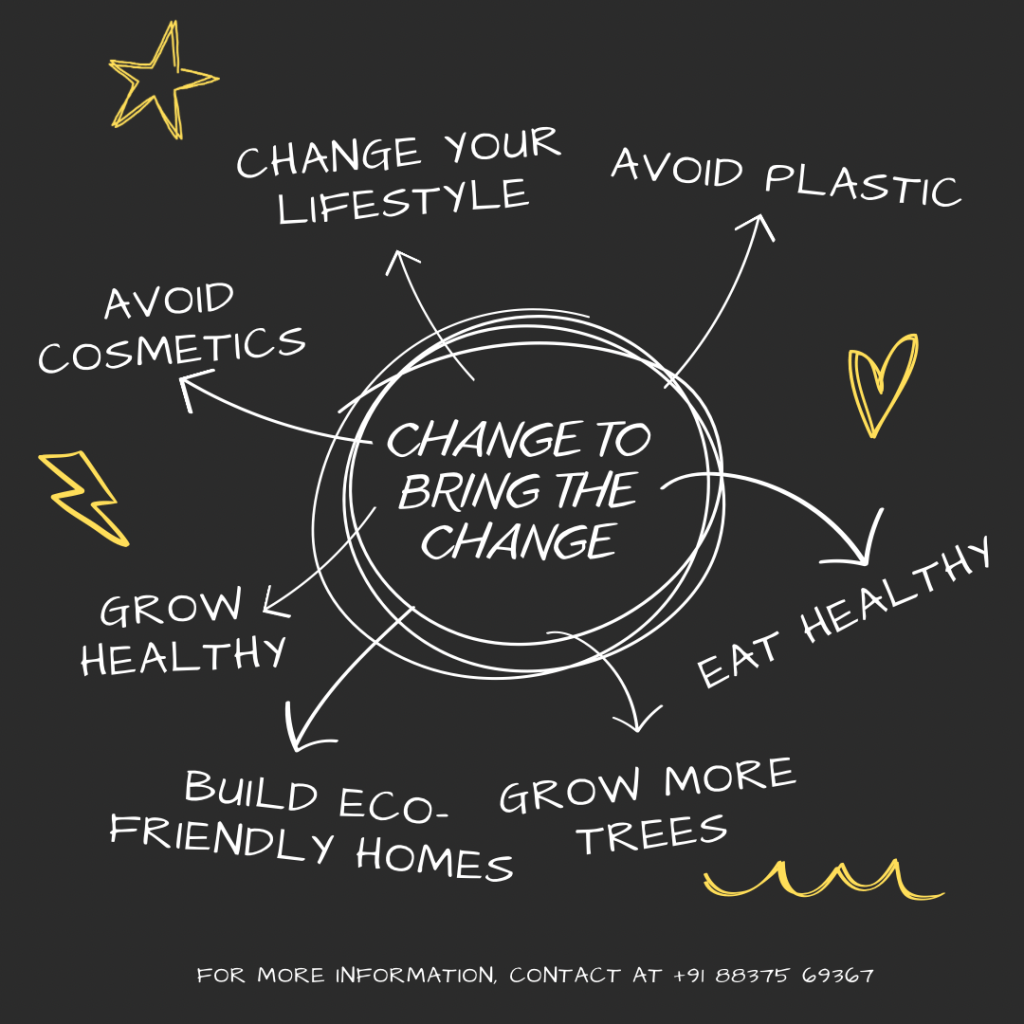
Environment pollution has impacted us in many ways. There are some factors that we cannot revert back. However, we still hold few things in our hands that we can change.
- Prohibit the use of plastic in your day today life
- Grow more trees
- Avoid cosmetic and artificial products
- Build eco safe houses and offices
- Eat Organic and Use safe utensils
- Lifestyle modifications: one should indulge more in physical activity, quit smoking, alcohol, substance abuse, spend more hobby time, family time, etc.


 Dr Anadeep Chandi
Leave a reply to anachandi Cancel reply