
In general population of men, the incidence of high sperm DNA fragmentation index (DFI) is around 2-4 %. This incidence is increased in infertile men. It has been seen that, the pregnancy rate in infertile men falls, i.e. 7% with IUI, 26% with IVF, 42% with ICSI, if DFI >30%.
Human DNA is packed into chromosomes with the help of histone proteins forming a helix. Human sperms are different from other human cells. During spermiogenesis (final step involved in sperm maturation), sperm chromatin undergo certain changes in the epididymis. The histone proteins binding the sperm DNA are displaced with transition proteins, then by protamines which are basic and much smaller than histones. This nuclear compaction protect the sperm genome from external stresses.
Transient DNA strand breaks are introduced during spermiogenesis for transient relief of torsional stress, favouring the histone replacement with protamines during final maturation from round to elongated spermatozoa. These physiological breaks if not repaired can lead to DNA fragmentation or genetic mutations in the ejaculate.
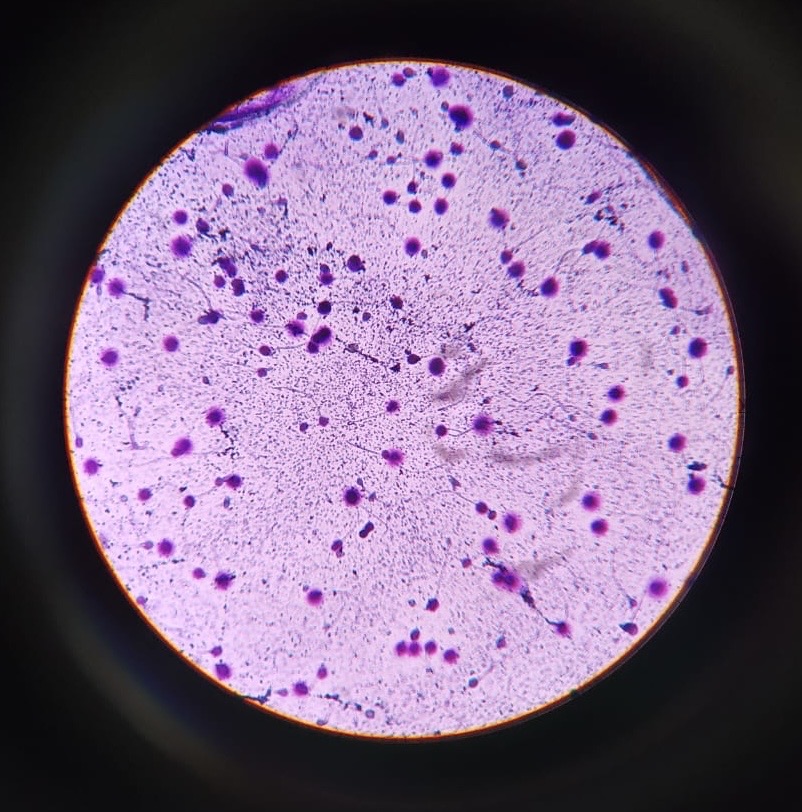
Causes of High DNA fragmentation
- Chemotherapy
- Febrile illness
- Spinal cord injury
- Testicular cancer
- Environmental toxins
- Drugs and radiation
- Hormonal factors like testosterone
- Cigarette smoking
- Genital tract inflammation
- Testicular hyperthermia
- Varicoceles
All these factors induce sperm DNA damage by directly increasing the reactive oxygen species (ROS) inside the sperm that is rich in polyunsatuarted fatty acid (essential for fertilisation) or indirectly by changing the hormonal milieu of testis and epididymis by lowering the activity of testosterone dependent DNA enzyme topoisomerase and reduced production of antioxidants by epididymis. The free oxygen radicals activates caspases and endonucleases which results in excessive DNA breakage.
How does high DNA fragmentation affect fertility?
Sperm with high DFI results in
- Poor embryonic development
- Decreased implantation
- Lower pregnancy rates
- Foetal mutations
- Recurrent pregnancy losses i.e. repeated abortions
- Increased risk of cancer in offspring
Young oocyte and early embryos have a capacity to repair sperm DNA damage to some extent. Post fertilization development is affected by improper repair by the oocytes leading to implantation failure, early miscarriages, or diseases in the offsprings.
What can be done for High DFI?
- Anti-oxidants and lifestyle changes
- Treatment of underlying cause
Antioxidants
The aim is to use supplements that support the one carbon cycle involved in methylation and synthesis of major intrinsic anti-oxidants like glutathione, hypotaurine and CoQ10.
Type of antioxidants used:
| Antioxidant compound | Mechanism of action | Dosage (daily) |
| 1. Vitamin C | Neutralises free radicals | 400mg |
| 2. Vitamin E | Neutralises free radicals | 400mg |
| 3. Vitamin D | Improves oxidative stress, effective in increasing motility of sperms | 60K IU weekly for 8 weeks, 60K IU monthly for 8 months |
| 4. Vitamin B9 (Folic acid) | Scavenges free radicals | 5 mg |
| 5. Zinc | Inhibition of NADPH oxidase | 25mg |
| 6. Selenium | Enhancement of enzymatic antioxidant activity | 26mcg |
| 7. CoQ10 | In its reduced form, scavenges free radicals intermediate in mitochondrial electron transport system | 20mg |
| 8. NAC | Enhances enzymatic antioxidant activity | 600mg |
| 9. Carnitines | Neutralises free radicals and acts as an energy source | 1500mg |
| 10. Lycopene | Quenches free radicals | 6-8 mg |
*Short term use of 2-3 months appear to be safe. Caution need to be applied for indiscriminate use of high dosage for long periods.
Prolonged use of Vitamin C and Vitamin E has shown higher DNA decay, even if ROS is reduced.
High DFI even after antioxidant course. What else can be done ?
Strategies to reduce DFI during fertility treatment:
- Instruct patients to deliver specimens 1-2 hour before Assisted Reproductive Technology (IUI, IVF, ICSI) is to be performed.
- Process specimens as soon as possible (DFI Levels immediately following processing are significantly lower for swim-up, density gradient, than for fresh and washed semen samples).
- Repeated ejaculation during one week before ART programs (Shorter abstinence period of 1 day and serial ejaculation).
- Incubation time after processing should not exceed 4 hour, after which semen should be freezed.
- Thaw cryopreserved specimen just before performing ART.
- Micro-injection (ICSI) with spermatozoa selected with the use of a high-magnification optical system. (high-magnification ICSI).
- MACS (Magnetic-activated cell sorting): It is a sperm selection technique in which the dead (apoptotic) sperms containing high contents of fragmented DNA are separated from rest of the healthy sperms by identification of externalized phosphatidylserine (PS) residues on apoptotic sperm cells by annexin V-conjugated superparamagnetic microbeads. This technique reduces the proportion of sperms with fragmented DNA in the ejaculate before using it for ART procedures. It has been shown that MACS-ICSI lead to significantly lower miscarriage rates, higher pregnancy rates, and a significant increase in live-birth rates.
- TESA (Testicular sperm aspiration): This is technique, where the sperms are directly taken out from its origin (i.e. Testis), by-passing the epididymis where the spermiogenesis occur. This sperm retrieval technique also helps in selecting sperms that have less DNA damage. It is an invasive technique, cheaper than MACS, and is done under local anaesthesia.
OI/IUI or IVF ? Can DFI test help?
It has been seen, the results of ovulation induction/IntraUterine Insemination (IUI) gets compromised if DFI (tunnel method) is >30 %. Therefore, in cases where DFI remains high even after antioxidant treatment, IVF-ICSI is better option with a success rate of around 35-50%. The success rate of IVF-ICSI can be increased with MACS-ICSI or TESA-ICSI, depending upon of the facilities available at the fertility centres.
Conclusion: DFI is an important test for men who have history of chemotherapy, radiotherapy, varicocele, recurrent IVF failures or abortions, or when to decide between IUI and IVF.
To summarise: How to proceed with high DFI?
High DFI >30% with tunnel method
Step 1: -Antioxidant treatment x 2-3 months
-Treat the cause of High DFI
Step 2: Repeat DFI
Step 3:
-if Repeat DFI normal: can go for natural conception/ovulation induction/IUI, ruling out other causes of infertility.
-if Repeat DFI High: Go for IVF with MACS-ICSI, or TESA-ICSI

 Dr Anadeep Chandi
Leave a reply to How To Cutback The Environmental Impact on Human Fertility. – Dr Anadeep Chandi Cancel reply