
“Smoking is injurious to health”. How many of you have read it on cigarette packets, or TV advertisements or in the middle of a movie in theatres as caption? According to Centres for Disease Control and Prevention (CDC), more than 16 million Americans are living with a disease caused by smoking. Passive smoking alone contributes to around 41,000 deaths among nonsmoker adults, and 400 deaths in infants each year.
According to WHO 2020 data, around 22.3% of the world’s population uses tobacco in one form or other, 36.7% of men and 7.8% of women. Around 8.7 million people die from tobacco use every year (IHME’S global burden of Disease study).
Let’s find out how smoking effect your health by directly or indirectly effecting various organs of the body.
Respiratory system
Smoking increases the risk of tuberculosis, Chronic Obstructive Pulmonary Disease (COPD), lung cancer, and can aggravate asthma attack.
Symptoms include:
- Shortness of breath
- Increased Coughing, wheezing, hoarseness
- Bleeding during coughing
- Discomfort in eating, or swallowing
- Weight loss
- Feeling exhausted, or week
- Tightness in chest
- Blue/grey lips or fingernails
- Increased heart rate
- Swelling in feet or ankle region
Cardiovascular System
Smoking can increase the incidence of heart attack, arrhythmias, heart failure, and strokes. Smoking lead to imbalance in lipid metabolism, increase the risk of blood clotting, and can raise your blood pressure.
Symptoms include:
- Chest pain
- Increased heart beat
- Excessive Sweating
- Pain in the arm
- Heartburn
- Headache
- Paralysis of one side of body, or mouth
- Trouble in speaking
- Memory loss
- Redness of eyes
Cancer
Nicotine, found in large quantity in cigarettes, biddi, tambaku, etc, increase the risk of lung cancer, blood cancer, urinary bladder cancer, cervical cancer, colon and rectal cancer, oesophageal cancer, laryngeal cancer, liver cancer, mouth and throat cancer, stomach cancer, pancreas cancer.
Chewing tobacco can cause mouth ulcers, mouth and throat cancer, oesophageal cancer, and pancreas cancer.
Effect on Pregnancy
Both active and passive smoking is harming for the pregnant lady and the developing child inside her. It increases the risk of :
- Malformations like cleft lip
- Abortions
- Preterm delivery
- Intra-uterine growth stunting
- Low birth weight of newborn
- Sudden infant death syndrome (SIDS)
Effect on Reproductive System
Efect on Men
Smoking more than 20 cigarettes per day for more than 5 years can have negative impact on your sperm quality. It has been seen that semen of smokers have:
- Low sperm count,
- Increased abnormal sperms especially higher sperm head defects.
- High DNA fragmentation index (DNA)
It also increases the risk of erectile dysfunction.
Effect on women
Smoking leads to decreased egg quality and affect the hormone production. According to a study conducted during IVF treatment, it was found that for every 10 pack-year of cigarette smoking, there was a reduction of 2.5 eggs and 2.0 fewer embryos obtained. Also, women who smoked during IVF treatment cycle had around 50% reduction in implantation rate and ongoing pregnancy rate as compared to women who did not smoke.
The incidence of spontaneous abortion is higher in smokers than non smoker women.
Also, nicotine, alcohol and cocaine have negative effect on germline integrity and reproductive functioning leading to epigenetic modifications.
It is strongly recommended to quit smoking before undergoing IVF treatment cycle.
Effects of quitting Smoke
“Reversing the effect of smoking is slow”.
Quitting smoking start the healing procedure immediately.
- Your blood pressure and heart rate gets stablised within 20 minutes.
- Your pulse oximeter shows improvement in O2 saturation within 24 hours.
- Breathing, and sense of taste and smell improves in 2-3 days.
- Blood circulation improves in 1-9 months.
- Semen Quality starts improving in 3-4 months
- 1-5 years of smoke-free period decreases the risk of heart disease and stroke.
- 10 years of smoke-free lifestyle leads to improvement in risk of heart disease to a level similar to non smoker.
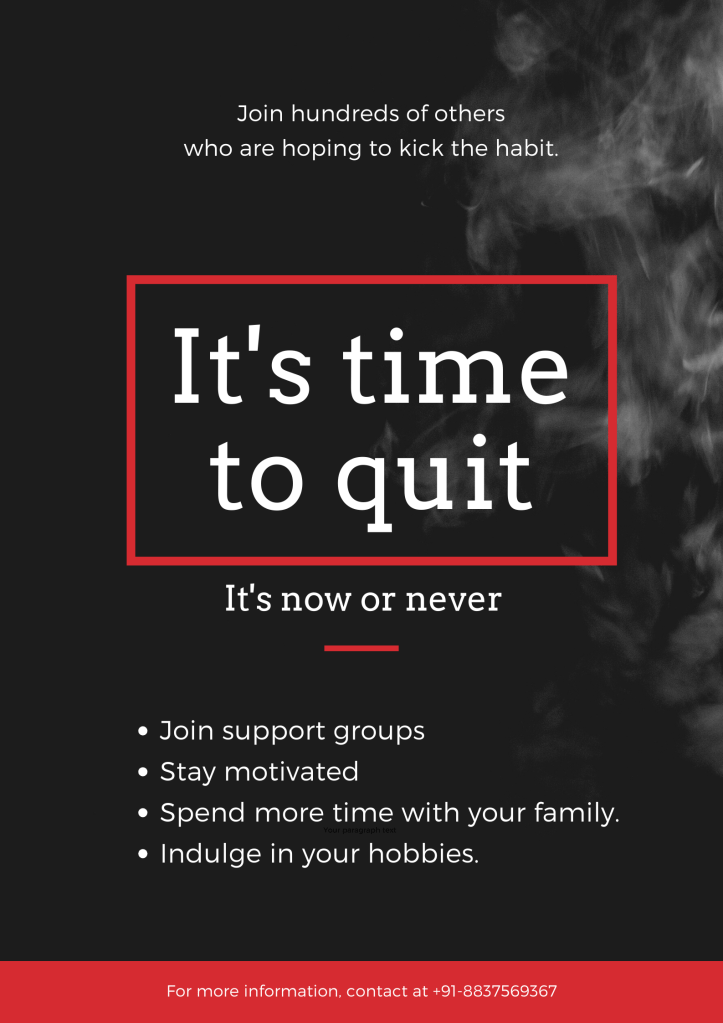
Nicotine withdrawal symptoms:
What to expect during smoke de-addiction period?
Nicotine withdrawal symptoms can be uncomfortable. You may experience following symptoms during de-addiction phase:
- Craving to smoke
- Feel irritable, grouchy, upset
- Feel restless
- Difficulty in concentrating
- Difficulty in sleeping
- Feel hungry all the time
- Feel anxious, sad or depressed
These symptoms usually fade over time as long as you stay smoke free. Seek professional help whenever required.
Conclusion
Smoking high nicotine content can effect lung, liver, pancreas, heart, brain and reproductive system of the body. Quitting smoking as early as possible can reverse the harmful effects of nicotine on the body. The person may experience some discomfort, however with proper guidance, motivation and strong determination, one can achieve the goal of smoke-free life.
Read more: Harmful effects of Smokinghttps://www.cdc.gov/tobacco/basic_information/health_effects/index.htm
 Dr Anadeep Chandi
Leave a comment